Written by: Shirley Tarazona and Omer Malikyar – Refugee Fellows at uOttawa Refugee Hub-Pathways International
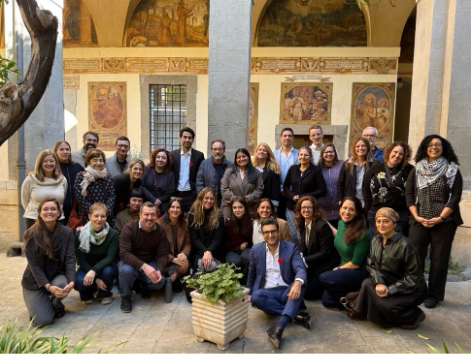
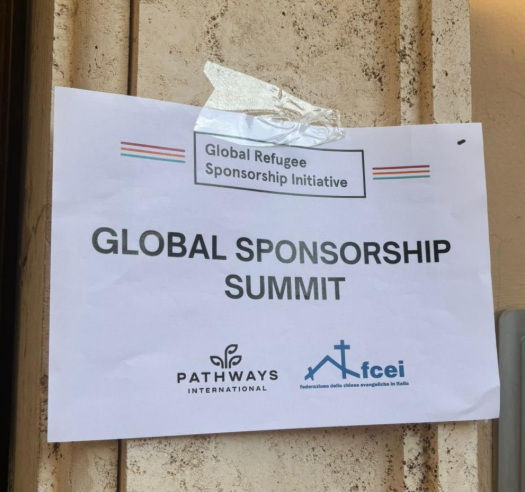
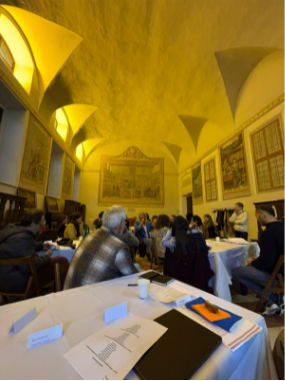
From November 11 to 13, we attended the Global Sponsorship Summit in Rome, Italy. This was co-convened by the Federation of Protestant Churches in Italy (FCEI), together with Pathways International. We were at the early stage of our fellowship with Pathways International-uOttawa Refugee Hub, and the summit offered a valuable opportunity to deepen our understanding of global sponsorship efforts and to engage with broader reflections from civil society organizations working across different regions. Hosted at St. Isidore’s College, the historic setting provided a thoughtful backdrop for conversations on displacement, welcome, and the future of legal pathways for refugees and other forcibly displaced people.
We arrived in Rome with more questions than answers: How can we create real solutions and sponsorship programs when the discourse against migrants grows every day? How can we find more sponsors when, in the streets, some people are whispering that they want to close their doors? How do we manage budgets that shrink month after month?
From Brazil to Australia, from Argentina to Ireland, and from Canada to Italy, we got the opportunity to see how Civil Society Organizations (CSOs) are pushing themselves to create safe pathways for migrants in an era that denies and persecutes their existence, and at the same time, helped us to answer our questions. This blog is a small tribute to the resilience of communities that refuse to turn their backs on those in need.
Sponsorship in Today’s World
The opening discussions focused on the current global context for migration and sponsorship, highlighting a shrinking political and operational space in many countries. Participants reflected on how public narratives around migration have become more polarized, often out of step with available data and lived realities. While public opinion on migration is complex and varies across contexts, there was a shared recognition that trust in institutions managing migration has declined, creating challenges for sustaining and expanding sponsorship pathways.
At the same time, reflections underscored that support for legal pathways continues to exist, though it is often uneven and sensitive to framing. Discussions highlighted that labour and education pathways frequently receive broader public acceptance than other forms of refugee admission. Importantly, these pathways are not separate from refugee protection; when designed with protection at their core, they can serve as meaningful and complementary routes for refugees and other forcibly displaced people to access safety, stability, and long-term inclusion. This nuance reinforced the importance of intentional pathway design and careful public communication.
Deep Dives on Sponsorship Systems and Innovation
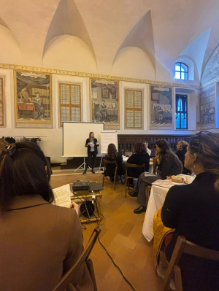
The second day of the summit focused on more in-depth thematic discussions around the sustainability of sponsorship systems. Sessions explored issues such as sponsor recruitment and retention, housing availability, organizational resilience, and strategies for navigating uncertainty.
The challenges are still serious. Many CSOs are facing funding crises, with cuts in humanitarian aid from major donors. This creates a paradox: more need and more willingness to welcome, but fewer resources and more political uncertainty. Sponsors and organizations now work in this tension every day.
These conversations highlighted that sponsorship systems depend not only on policy frameworks but also on strong relationships, trust within communities, and the capacity of organizations to adapt to changing conditions.
For us, these discussions offered important insight into the long-term nature of sponsorship work and the need to balance ambition with realism. They reinforced the idea that building effective pathways requires continuous learning, flexibility, and collaboration across sectors.
New Ways, New Paths, New Projects
Despite all these difficulties, the Global Sponsorship Summit showed that new ideas are emerging everywhere. Some examples that stayed with us were: the way rural communities in the United States are getting ready to welcome, Brazil’s effort to build sponsorship pathways for Afghan refugees, and Italy’s labour pathways.
In United States, large cities still play a key role, but some of the most interesting sponsorship work is now happening in small towns and rural areas. These communities often feel forgotten and under-resourced, yet they are turning themselves into places of welcome and opportunity for both newcomers and long-time residents. When formal opportunities to sponsor became more limited, many CSOs chose not to give up. Instead, they shifted their focus to advocacy and local organizing, turning community energy and civic engagement into future capacity for welcome. The idea is clear: even if they cannot sponsor as many people now, they are preparing their communities to host and sponsor in the future, while also standing by the migrants who are already there.
In Brazil, a different but equally powerful story is unfolding. Brazil is currently the only country in Latin America receiving Afghan refugees through formal sponsorship programs. Instead of closing the door, Brazilian actors decided to keep it open and see sponsorship as an opportunity. CSOs in Brazil are building partnerships with organizations in other countries to create safe routes for Afghan families who are in danger. Through these cooperations, people in third countries can support sponsorship from a distance while Brazilian CSOs and institutions receive and support the families on the ground. Brazilian authorities and partners insist on seeing migration as part of the country’s history and as a right to seek better opportunities. The connections built across continents show that even places once seen only as transit or departure points can become hubs of solidarity that help change how the world talks about migration.
In Italy, conversations around labour pathways provided insight into how local actors are working within existing systems to expand access for refugees and other displaced people, even in complex political environments. These reflections highlighted the importance of cross-sector collaboration and the need for context-specific solutions that align protection objectives with labour market realities.
Presenting the Mentorship Toolkit
An important part of our participation in the summit involved contributing to the exchange of practical tools and ideas. Both of us had the opportunity to present a mentorship toolkit developed by our mentor and program lead, with insights from the previous first generation of fellows. The toolkit focuses on how mentorship frameworks can strengthen organizational capacity and improve outcomes for refugee leaders. The discussion highlighted the value of peer learning and the role that structured mentorship can play in supporting both organizations and the individuals they serve. At the same time, this was an invitation to other organizations to create or implement their own mentorship programs for individuals with refugee, migration, or internal displacement experience, giving voice to those who are regularly ignored.
Leaving Rome Inspired and Hopeful
As the summit concluded, we left Rome with a sense of cautious optimism, a renewed sense of hope, and responsibility. While the global environment for refugee protection and migration continues to face significant challenges, what we saw in Rome reminded us that sponsorship is not only about policies or money. It is about the courage, creativity, and solidarity of communities that refuse to stop welcoming. Demonstrating the continued commitment of civil society actors to adapt, collaborate, and sustain sponsorship pathways. For us, the experience was both a learning opportunity and a reminder of the importance of collective effort, reflection, and persistence in advancing pathways that prioritize safety, dignity, and inclusion. We are not alone in this work. Even when the world feels divided, the Summit showed us that many ordinary people, in many places, are building extraordinary answers to our most urgent challenges.