

Written by: Omer Malikyar – Refugee Fellow at uOttawa Refugee Hub-Pathways International
Date: February 27, 2026
As a uOttawa Refugee Hub Fellow, I recently participated in the Global Pathways to Refugee Protection course at the University of Ottawa’s Faculty of Law – Common Law Section. Taught by Professor Jennifer Bond, the intensive three-week course was designed as an experiential learning opportunity for participants.
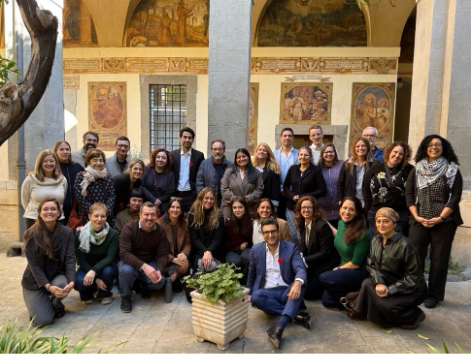
The course was academically rigorous, policy-focused, and deeply collaborative. For me, participating not only as a student but also as a Fellow made the experience especially meaningful. What made the course even richer was the presence of colleagues joining us from Brazil, Colombia, and Italy. They shared their professional experiences working on migration and protection issues in their own countries, adding comparative depth and practical insight to our classroom discussions.
From the outset, the course was structured around a clear objective: to prepare us to engage directly with policymakers on refugee protection pathways. We began with the foundations of the international protection regime, examining the legal definition of a refugee, the mandate of the UN Refugee Agency, and the architecture of global cooperation through instruments such as the Global Compact on Refugees. These early modules grounded us in the historical and legal frameworks that underpin protection systems. But the course quickly moved beyond theory.
We explored durable solutions, refugee resettlement systems in Canada, the United States, Europe, and Australia, and the evolving role of complementary pathways such as community sponsorship, education pathways, family reunification, and labor mobility. The readings and discussions constantly pushed us to ask difficult questions: Why are resettlement numbers still so low compared to global need? How do political pressures shape humanitarian commitments? What operational barriers limit innovation? And how can complementary pathways be designed in ways that are both protection sensitive and economically viable?
One of the most valuable aspects of the course was its practical orientation. We were not only learning about policy; we were preparing to contribute to it. Early assignments included a ministerial briefing note, which required us to synthesize complex global developments into concise, high-level recommendations suitable for government officials. Writing in that format was challenging. It demanded clarity, strategic framing, and precision. It was a reminder that strong ideas must also be communicated effectively to influence real decision makers.
The highlight of the course was the final week in Ottawa, where we met in person for four days. This portion of the course took place at the Refugee Hub and culminated in a policy exchange at the offices of Immigration, Refugees and Citizenship Canada (IRCC). Being physically present together transformed the dynamic of the course. After weeks of online learning and preparation, we shifted into an intensive collaborative mode. We were divided into small groups and assigned different labor mobility pathways for refugees across countries such as Italy, Germany, the United Kingdom, and Australia.
Our group focused on the United Kingdom’s Displaced Talent Mobility Pilot Pathway (DTMP). This pilot program is designed to facilitate access to skilled worker visas for refugees by connecting them with employers and adapting existing immigration infrastructure to address displacement related barriers. We examined how the pathway operates within the UK’s broader skilled worker visa system, the legal basis for its implementation, and the practical challenges refugees face in accessing labor mobility channels, including documentation gaps, recognition of qualifications, and employer engagement.
Analyzing the DTMP required us to move between policy design and on the ground realities. We assessed its strengths, such as leveraging existing immigration categories rather than creating an entirely new protection track, and its limitations, including scale, sustainability, and political buy in. We also considered how similar approaches might translate into the Canadian context. What elements of the UK model could inform Canadian labor mobility pathways for displaced talent? What legal or regulatory changes would be required? How might employer partnerships be structured? These discussions sharpened our ability to think comparatively and strategically.
Throughout the week, we refined both a written policy brief and a PowerPoint presentation. Preparing for the policy exchange with IRCC added a level of seriousness and accountability that is rare in most academic settings. We knew our audience would include public servants working directly on Canadian labor and complementary pathways. This was not a simulated exercise. It was a real opportunity to contribute to ongoing policy conversations.
On the final day, we presented our findings at the IRCC office. Standing in front of government officials and presenting our analysis of the UK’s DTMP was both exciting and humbling. We walked them through the structure of the pathway, key operational features, comparative insights, and recommendations relevant to Canada. The discussion that followed was one of the most valuable learning moments of the entire course. IRCC staff asked probing questions about scalability, risk management, employer incentives, and program integrity. Engaging in that dialogue forced us to defend our reasoning, clarify our assumptions, and think more deeply about feasibility.
For me, the experience expanded my understanding of complementary labor pathways in several ways. First, it highlighted how labor mobility can serve as a protection tool when designed intentionally. Second, it underscored the complexity of aligning humanitarian objectives with labor market needs. And third, it revealed the importance of political will and administrative capacity in determining whether innovative pilots remain small experiments or grow into systemic change.
Beyond the policy content, the course strengthened essential professional skills. I learned how to distill large amounts of research into concise, decision-oriented briefs. I practiced delivering high level presentations tailored to government audiences. I experienced collaborative research across cultures and professional backgrounds. Working alongside colleagues from different countries enriched every conversation. Their comparative insights often challenged my assumptions and reminded me that refugee protection is inherently global.
Perhaps most importantly, the course reinforced the idea that meaningful change in refugee protection requires bridging academia, civil society, and government. The policy exchange model demonstrated how students and Fellows can contribute constructively to real policy debates when given the opportunity and the right framework.
Looking back, the three-week intensity of Global Pathways to Refugee Protection was demanding but transformative. It deepened my knowledge of resettlement systems, sponsorship models, and complementary pathways. It sharpened my analytical and communication skills. And it gave me firsthand experience engaging with policymakers on complex protection issues. As a Fellow, the course felt aligned with my broader commitment to expanding safe and legal pathways for displaced people. It was not just an academic experience, but a professional milestone that will continue to shape how I approach refugee policy and advocacy in the future.
![Building Better Relationships: Between Private Refugee Sponsors and Sponsorship Agreement Holder Organizations [A Survey Report: Spring 2025]](https://resettlement.plus/wp-content/uploads/2026/03/Screenshot-2026-03-27-at-3.15.47-PM-1024x964.png)